Thursday, April 21, 2011

Beach Profiling

Introduction: Beach profiling is a way to measure the profile of a beach using a GPS, transect line, rise tool, run tool, and compass. By using this method we can study how the waves and winds affect the structure of the beach. Some factors that get in the way of beach profiling are rocks, big branches, or trees.


Procedure: beach profiling
1.) Gather materials
2.) Use the GPS to mark where you are on the beach 
3.) Connect the transect line to the faded zip tie on the top of the beach and pull it down perpendicular to the water.
4.) Use the compass to find how many degrees it is facing the water.
5.) Stand the rise tool up till the level is straight
6.) Put the run tool at the end of the rise tool, make sure its leveled
7.) Read how many centimeters
8.) Continue this all the way down to the foot of the beach


Friday, April 8, 2011

Sand Origins pre-lab

Introduction: In this Lab we wil be testing different sands from a number of beaches in the area to see if they are either biogenic sand which is anything living or pre-living in the ocean that produces into sand, or detrital sand which is washed away rocks from cliffs that are blown away from currents.

Question: Which beaches in South Maui are Detrital and Biogenic?

Hypothesis. I hypothesize that big beach is biogenic and black sand beach is detrital.

Prediction: If big beach is biogenic, when we do the experiment the sand will crackle, if its detrital it wont do anything.


Procedure:
1.) Gathered materials
2.) Went to Big beach and Black sand beach
3.) Collected and Observed sand from those beaches.
4.) Put sand in beaker
5.) Added 20 drops of vinegar to sand
5.) Observed to see if the sand crackled and popped.


Materials: Pipette, Beaker, Sand, Vinegar, Journal, Plastic Cup


 Black Sand Beach
Big Beach


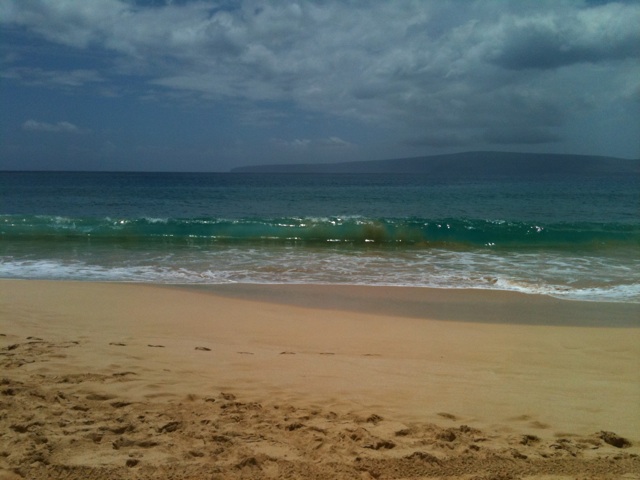
    On Monday we went to the beaches to collect samples of sand. I observed that the sand at Big Beach was light brown with more of a fine texure and had a thinner feeling. Black sand beaches' sand was more rocky, and dark with light colors mixed together, it was also thicker and felt more dirty.

On Wednesday we tested the sand and found that both big beach and black sand beaches sand reacted to the vinegar, which made them snap and crackle, I was a little surprised that the sand from black sand beach was detrital, but I think it was because their was some lighter color sand from elsewhere that was blended in with that sand.

Conclusion: My question was which beaches in South Maui are detrital and biogenic. I hypothesized that Big beach would have biogenic sand and black sand beach would have detrital sand. My hypothesis was half correct, Big Beach did have biogenic sand but black sand beach did also.

Some errors could have possibly occurred, if we added too much vinegar to the sand during the experiment, also if the sand was accidentally mixed together with other sands.


BIG BEACH


                                       BLACK SAND BEACH

Classmates observing sand


Tuesday, March 29, 2011

Final Whale Observation

     In our science class we did a lab on whales. My question was will their be more whales earlier or later in the season? To figure this out we went to our fist location at Mc Gregors Point and later in the season we went on a whale watch. From my observation their were more whales during the whale watch. I think this because the mothers gave birth and now they are all migrating back home with their babies.           


The whale watch was a fun experience and I enjoyed watching for whales and learning more about them.


This Graph shows that we saw more whales later in the season on the whale watch.


Thursday, January 27, 2011

Whale Observation

     On Monday we went to McGregor's point to observe whales. The purpose of this was to use our clinometers to see how far the whales were from our point of view, and by using the formula Distance = Elevation x tan (angle of inclination).
     My questions is "will there be more whales earlier or later in the season"? My hypothesis is that there will be more whales earlier in the season because that's when all the whales are migrating and later they all will migrate back so we might not see as much.
     My experience and McGregor's point was interesting, my favorite part was looking for the whales and measuring them with the clinometer. One challenge was the when we looked in the clinometer it was some times hard to tell what angle the string was hitting because of the wind. We saw a bunch of whales that were spouting


Monday, January 3, 2011

Marine Phyla Lab Reflection

     In this unit we learned about all the different types of Phyla. There are nine different types of marine Phyla, they are Mullusca, which are clams, oysters, snails, and squids, Arthropoda are lobsters, crabs, and shrimp. Echinodermata include starfish and sea urchins. Nematoda are hook worms and round worms. Platyhelmithes are flatworms and tape worms. Cnidaria include coral, sea anemones and jellyfish. Porifera are sponge-like creatures. Annelids include earth worms and leeches, and Chordata refer to fish. What we did was we went to the fish ponds and layed down a quadrant five times in a random placement and counted all the marine phyla we could find and tallied them on our data sheet table, then we averaged them out with the wholes classes data to see which was the most present and more in diversity.

     My research questions was Which marine Phyla are going to be more present in the south Maui tide pools, and which one will have a larger quantity? My hypothesis was that the Phyla, Chordata, Echinodermata, and mullusca will be more present in the tide pools. My hypothesis in having to find mollusks the most in diversity was correct because that was the most that we found. Some sources of error were that we could have miss counted creatures in the quadrant, the tides could have been different either high or low at different times, or that some creatures might have moved out before we got to count them. 

     My favorite part of this lab was the experience of going out to the tide pools and finding all these marine phylum's that Ive never seen before. I also learned new skills on making a better lab and making pie graphs.


Tuesday, November 16, 2010

Geocaching

For the past few weeks we have been experimenting with geocaching in our science class. Geocaching is a world wide hunting game that you do to find caches by using a GPS. We used a site called Geocaching.com to get the exact coordinates to put in the GPS according to caches around the kihei area.

I learned that geocahing can be difficult at times and that its very important that when you find a cache that you put it back in the same place.

Our results were that we found one cache and the other locations we looked we could not find them.


 This is a picture of a few people in my group looking for the cache, but unfortunately we did not find it.

Tuesday, October 19, 2010

Termite Observations

The First thing we did was fill a small jar with 20 grams of silicon sand, a piece of  Douglas wood, and 18 ml of water.

After that we added termites to the jar and observed them in each class, as the days passed the sand would begin to sink from the water that was put inside. The termites were beginning to chew on the wood but not fully yet. The sand would also move around a lot because of people moving the jar. After a while you could see that the termites were making a little progress in biting the wood.

I learned a lot from this termite unit, it defiantly got me prepared for the future if i ever start to see something that would concern me about having termites. My favorite part was doing the mark release recapture method and making the brochure. My least favorite part was looking at the protazoas.